
We use cookies to make this site work and, with your consent, to understand how it's used and improve our marketing. Read more in our privacy policy.
Connecting the dots
act before, not after
For as long as we have cared about health, the goal has been simple:
act before things go wrong.
But medicine has largely been organised around disease: naming it, treating it, managing it once it appears.
Prevention happens earlier, in the years where risk builds before illness shows. That is the part we have measured least, and usually only in fragments: one test, one visit, one result.
We built ABC Labs to work differently. Reading health continuously, across a lifetime, so we can act early instead of late. Not a better version of traditional healthcare, the opposite of it.
TREATS TOO LATE
Preventive care accounted for just 3.7% of current healthcare expenditure in the EU in 2023. (Eurostat)
Prevention pays back
Public health interventions return a median of £14 for every £1 invested. (Journal of Epidemiology & Community Health)
UNDERFUNDed RESEARCH
Primary and secondary prevention account for only 27.4% of NIH research funding. (U.S. National Institutes of Health)
PRESS RELEASE
STOCKHOLM, 28 SEPTEMBER 2026
The new Artemis study aims to advance the science of disease prevention. By combining health data collected since 2009 with new assessments and advanced analyses, researchers will study how biology, lifestyle and the environment interact to shape health over time. This offers a rare opportunity to trace patterns that emerge years before disease becomes apparent and understand what might be prevented.

Artemis is led and coordinated by ABC Labs, based in the Forskaren building next to Karolinska University Hospital in Stockholm.
Why do some people become ill while others with similar risk factors remain healthy? This is one of the central questions for Artemis, which builds on LifeGene at Karolinska Institutet and draws on a group of around 40,000 people.
For many participants, questionnaire responses, clinical assessments, laboratory results and biological samples are already available. Combined with continued follow-up, these records will help researchers understand what happens in the body over many years, both in people who remain healthy and in those who develop disease.
Researchers will examine genetic factors, proteins and other biological markers alongside information about participants’ lifestyles and environments. Statistical methods and advanced computational models will help them identify relationships that may be difficult to detect when individual factors are studied separately.
Repeated assessments will show how these relationships develop as people’s health changes. Identifying early biological changes is one step. Further research is needed to understand whether these changes contribute to disease and whether altering them could reduce the risk. The study takes a broad approach, with particular interest in common diseases that affect large numbers of people.
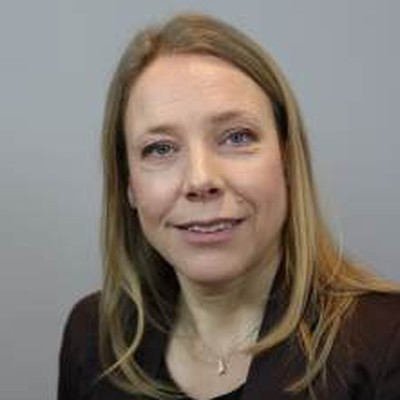
”What makes Artemis different is that we already have a detailed picture of participants’ health going back many years. By combining this with new assessments, we can look for patterns that were present long before disease or clear warning signs emerged. That would be difficult to achieve with a study starting from scratch today.”
Much of what we know about disease comes from studying people who already have a diagnosis. Following people while they are healthy could help researchers identify when and how disease might be prevented.
The longer-term ambition is to make prevention more precise. Differences in biology and circumstances may explain why the same advice or treatment benefits some people more than others. Findings from Artemis could help guide prevention and care that take these differences into account.
”To improve prevention, we need to understand more about what happens before disease develops. If we can identify biological changes years before someone becomes ill, we can begin to work out which changes matter and which we might be able to influence.”

The answers and samples LifeGene participants provided years ago can help address questions that a single health check cannot answer. Continued participation will help connect this earlier information with participants’ future health.
Participants will also have the opportunity to follow their own health over time, while contributing to research that could help more people live longer in good health.
Artemis is led and coordinated by ABC Labs and brings together researchers and specialists in genetics, molecular epidemiology, proteomics and data-driven biomedicine from institutions including Karolinska Institutet, Uppsala University and KTH Royal Institute of Technology.
The study has been approved by the Swedish Ethical Review Authority.
the opposite of reactive care
01
We read health as it moves over time, not one moment at a time.
02
Genome, proteins and metabolites, read together as one signal.
03
Patterns across populations sharpen the picture for each person.
04
We look for signals before a diagnosis, not after symptoms appear.
05
The goal is staying well, not only getting better.
the working infrastructure
Health changes gradually. We follow people over years, not one moment at a time, so long-term signals become visible.
We measure across many layers of biology, from genes and RNA to proteins, metabolites, and clinical markers. Each layer tells part of the story. Together, they show how health changes.
Repeated measurements only matter if they can be compared. We measure consistently over time and connect results to long-term health data, turning data points into trajectories.
The infrastructure of preventive health
Your health does not change overnight. It shifts slowly, year by year. By following the same people over their whole lives, we can see a change as it begins, instead of a single snapshot that misses it.
A normal test usually checks one thing, once. We look at the body on every level at the same time , from your genome to your lifestyle and bring it together into one complete picture.
To compare health fairly, everything has to be measured the same way, every time. Clinical-grade panels and a wearable on your wrist, repeated over the years, add up to something powerful.
direction, not a single value
Follow how your biomarkers change over time, while helping scientists uncover patterns that can lead to earlier prevention, better treatments, and more precise medicine. A single test shows a moment. A moving record shows direction: the drift, the trend, the change worth acting on.
Why we started here
For more than half a century, Sweden has helped shape the field of preventive health, not through a single breakthrough, but through a deep, quiet trust in measurement. In health registries, in biobanks, in following a population's health over time.
A personal identity number links a lifetime of records into one continuous thread, and national registries let that thread reach back decades. We can follow a real life as it happens, not piece it together. That depth and consistency exist nowhere else and it is why preventive health belongs here.
Lars Wilhelmsen
A pioneer of Swedish cardiovascular epidemiology, whose long-term population studies showed how risk could be tracked across decades.
1970s
1980s
The Malmö Preventive Project
One of the largest preventive screening programmes ever run, following tens of thousands of residents to learn how disease develops.
Hans-Olov Adami
Pioneered the use of Sweden's national health registries to understand disease at a scale possible almost nowhere else.
1990s
2000s
Hans Rosling
Changed how the world sees health data, making population-scale evidence clear and usable for everyone.
Ulf Gyllensten
Helped establish Sweden as a global leader in genetics and population-scale biobanking.
Chief Scientist at ABC Labs · Professor of Genetics, Uppsala University
2010s
2020s
Sara Hägg
Leads research into aging, longitudinal health and disease prevention through LifeGene.
Advisor and partner to ABC Labs
TODAY
ABC Labs
Combining accredited diagnostics, longitudinal data, automation and AI to build the next generation of preventive health infrastructure.
sweden has the conditions
Sweden has spent decades creating the conditions for preventive health. Personal identity numbers. National health registries. Biobanks. Longitudinal cohorts. A research culture centered on following people over time. The idea has been here all along: health makes more sense when you can see the whole arc. What is new is the ability to connect it all.
We can now measure biology in depth, link it to lifelong health data, and analyse patterns across populations. ABC Labs brings the working infrastructure: sampling, logistics, accredited lab operations, results, follow-up, automation, data systems, and scientific oversight in one platform. Sweden created the conditions. ABC Labs makes them usable at scale.
ABC Labs news | a new chapter in preventive health research
Artemis, a new research study conducted by ABC Labs, has received ethical approval.
Built on a cohort of more than 40,000 participants, the study will combine biological samples, genome sequencing, wearable technology, Swedish registry data, and long-term follow-up to analyse how health and disease develop over time at population scale.
By linking biological data with decades of health information, Artemis is designed to help researchers uncover patterns of risk, resilience, and prevention that are rarely visible at this scale. With Artemis, ABC Labs and its research partners are launching one of the most ambitious longitudinal preventive health studies to date.
Built for everyone who needs health to move upstream
For researchers
Access high-resolution, registry-linked, longitudinal health data. Study how disease emerges, and build the next generation of medical AI.
Partner with us →For organisations
Offer your people something rare: longitudinal health intelligence. Reduce risk and act upstream — investing in health before it becomes cost.
Explore partnership →For individuals
We are building the most detailed picture of human health ever created and there are ways to take part, both in contributing to research and in benefiting from it.
Get in touch →
Partner with us
We’re bringing together forward-thinking partners across diagnostics, research, technology and health data to understand how disease begins and what it takes to prevent it. This calls for new perspectives and collaborations. Would you like to be part of it?
Get in touchWe use cookies to make this site work and, with your consent, to understand how it's used and improve our marketing. Read more in our privacy policy.